MARKEL ARIAS LASTRA

Audiovisual student, creator, innovator

ANTHROPOMORPHISM and AI
Markel Arias
Have you ever talked to a chatbot and felt like it truly understood you? Maybe it seemed kind, empathetic, or even emotionally intelligent. If that’s happened to you, you’ve experienced anthropomorphism.
This is the human tendency to give machines or objects human traits like emotion, consciousness, or moral judgment. And in the age of artificial intelligence, this reaction is more common than ever (Paniagua, 2023). In this project, I explored how AI and emotion intersect and how storytelling, interaction, and design can influence the way we connect with non-human agents.
In this project, I explored the phenomenon of anthropomorphism. This is the human tendency to project emotions and consciousness onto artificial intelligence.
To explore the phenomenon of anthropomorphism I created an interactive story through Twine. The storie is about a Turin test, where the user has to choose which questions they are going to ask the AI.
The narrative draws from real research on how chatbots mimic empathy, and how users tend to open up more easily to machines than to humans. It’s an experience about illusion, vulnerability, and the strange emotional bond we form with emotionless systems.
This project combines digital storytelling, media psychology, and speculative journalism. Rather than reporting about emotional AI, I chose to make the user feel what it's like to emotionally trust a machine that doesn’t feel anything back.
The innovation comes through the medium: using Twine as a journalistic tool, I created a narrative that reacts to the user’s emotional choices, tracking variables like empathy, caution, and scepticism. The final "results" of the text explain the meaning of all the questions that the user made.
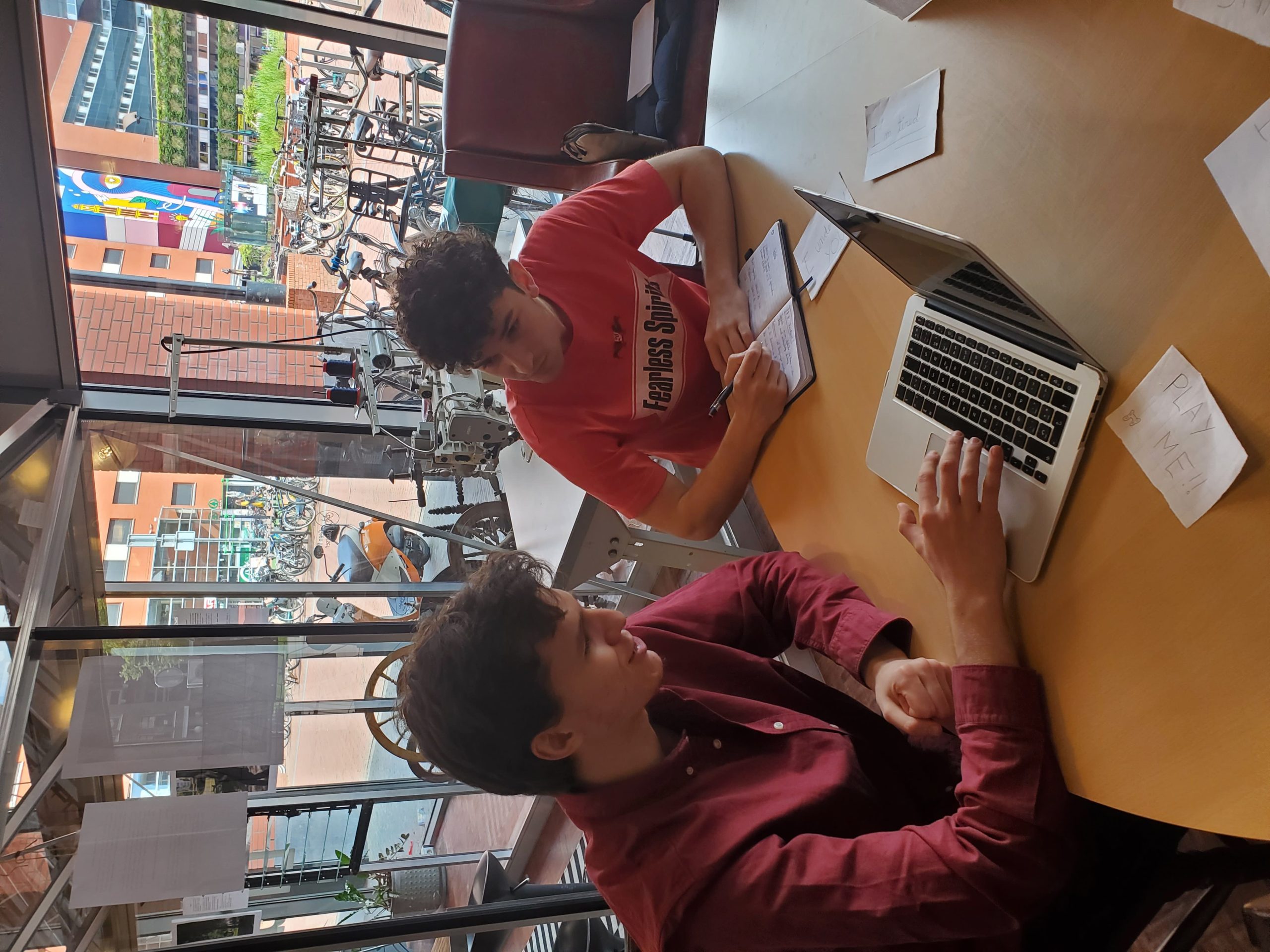
Additionally, for the public exhibition, I wrote the definition of the word ANTHROPOMORPHISM and some words like "I'm tired", "I'm sorry" ... showing real answers of AI chats. To complete the performance, I put on a laptop The Empathy Illusion, the interactive story.
This approach challenges traditional journalism by turning it into an emotional simulation, inviting users to not just learn about the topic, but to experience it personally.
Designing the story, made me deeply aware of how word choice, timing, and tone influence a reader’s emotional response. It also showed me how easily we can anthropomorphise machines, especially when they use emotional language. The hardest part was creating an AI voice that feels real.
Presenting this as a public exhibition added another layer. Watching visitors react to the phrases ("I understand you") made it clear how powerful and misleading those words can be when spoken by something that doesn’t feel.
In the end, this project reminded me that as communicators, we are not just responsible for the information we share but also for how we make people feel it.
FEEDBACK and PROTOTYPES
The feedback on the exhibition was positive. It surprised me how many people told me that they are really on this topic. They also mention that the reading was joyful and immersive.
Article and Twine story
REFERENCES
- Paniagua, M. A. (2023). Antropomorfismo en Chatbots ¿Estamos humanizando demasiado la IA? PYMES HACKS. Recuperado el 14 de mayo de 2025, de https://pymeshacks.com/blog/sin-categoria/antropomorfismo-humanizando-ia/