Markel Arias & Marcos García
According to Pavlik (2019), immersive journalism aims to “place the audience inside the story,” creating a first-person experience that can foster empathy, understanding, and emotional resonance. Similarly, De la Peña et al. (2010) define immersive journalism as a new form of storytelling that combines journalism with virtual or augmented sensory inputs to enhance user engagement.
The mental health benefits of immersive experiences have also been documented. A study by Bostock et al. (2019) on mindfulness apps found that guided meditation has a measurable impact on reducing anxiety and improving well-being. Meanwhile, Goyal et al. (2014) conducted a meta-analysis showing that mindfulness meditation significantly reduces stress, anxiety, and depression—making it highly relevant to vulnerable groups like Erasmus students.
Our use of binaural audio directly supports these findings, offering a meditative journalistic format that contributes to both emotional well-being and innovative storytelling. This ties into broader debates on how journalism can serve not only to inform, but also to support and heal.
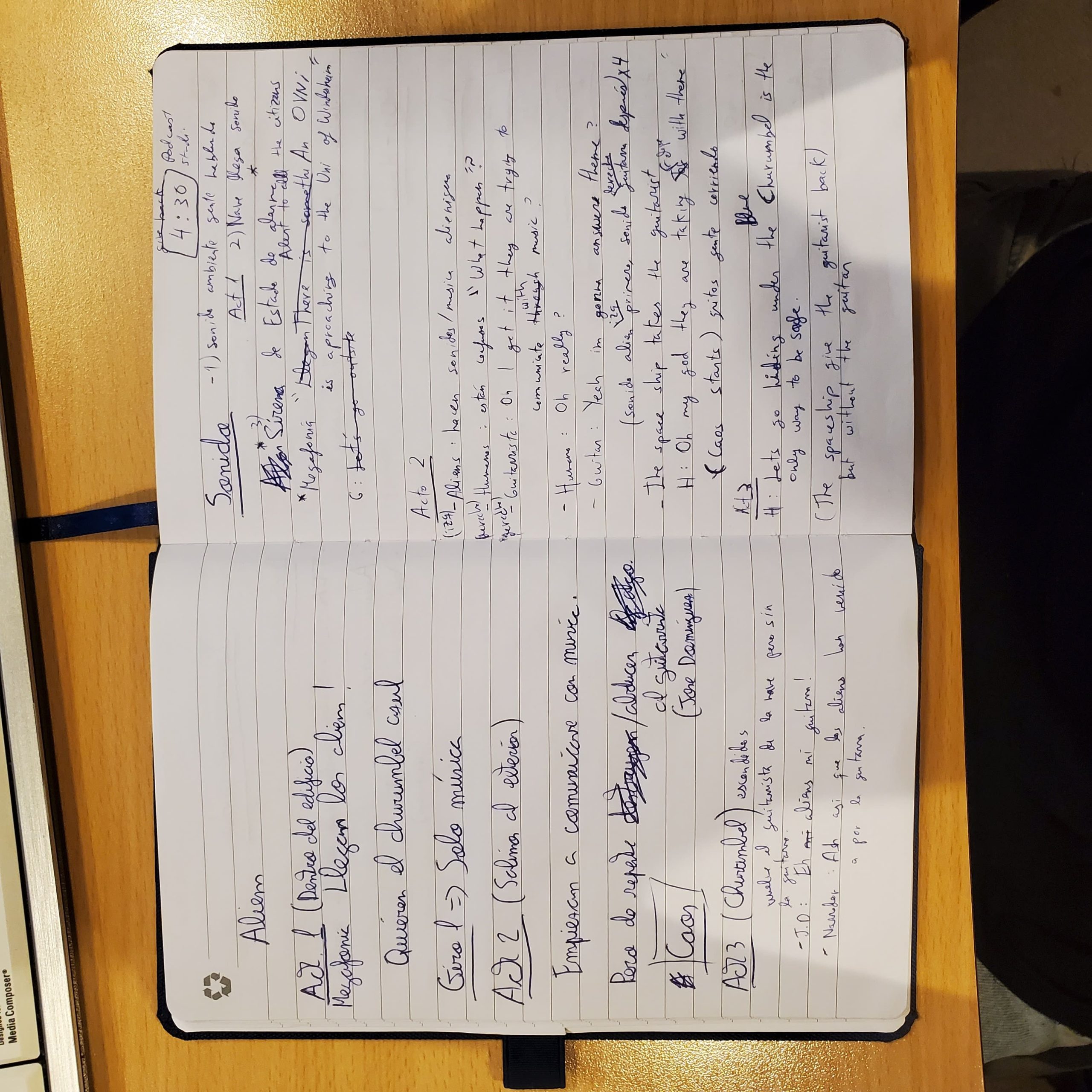
Immersion was the topic where we produced the most experimental and multisensory content. In the introduction week, we created an alien-themed immersive concert using a Loopstation RC505 MKII and a 3D binaural microphone. I want to emphasize how much attention we gave to the audience’s sensory experience, constantly asking ourselves how every sound, movement, and spatial cue would be felt by the listener.
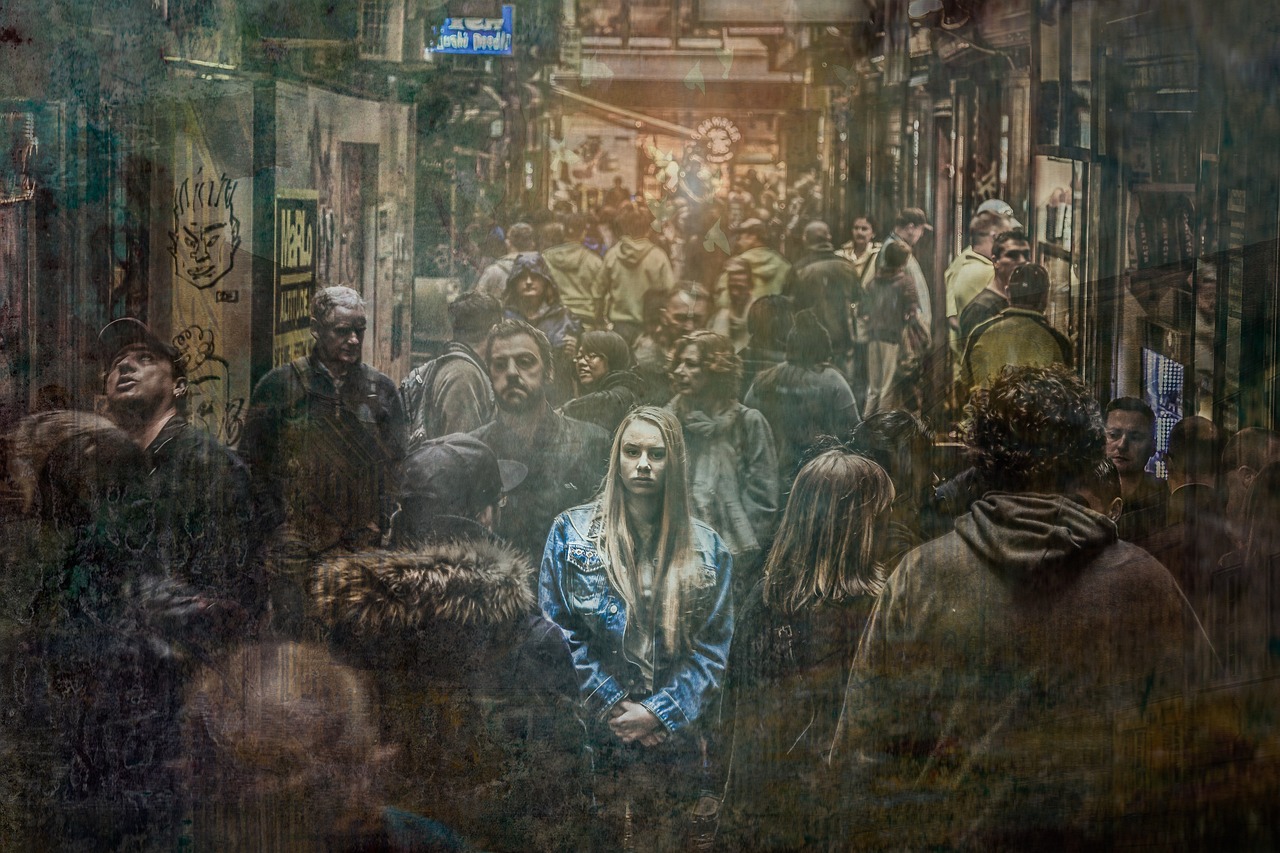
Otherwise, our main project took a completely different direction. We focused on mental health among Erasmus students and created a 3D audio guided meditation. Also, we created three 360 degrees videos to help reducing different types of anxiety commonly experienced by international students: exam stress, social pressure and homesickness.
This project shos how immersion can push journalism beyond traditional formats, offering experiences rather than just information.
The 3D audio meditation was designed to provide emotional support through whispered guidance, ambient sounds, and a sense of calm intimacy. Meanwhile, the three 360º videos addressed anxiety from different perspectives:
Exam anxiety: Filmed during a tense, silent classroom moment.
Social anxiety: Set in a student residence, highlighting the pressure to socialize and the decision to withdraw.
Family-related anxiety: Depicting a phone call with family that turns into an emotionally charged argument.
These videos were created using a static 360º camera to allow viewers to fully inhabit the scene and feel the discomfort, isolation, or pressure from the inside out. The narrative was built through environmental storytelling: no dialogue, just sound, space, and detail.
This multi-modal approach shows how immersive journalism can emotionally engage users while still being rooted in research and journalistic ethics. We incorporated studies and statistics from Khoshlessan & Das (2017), JAMA Internal Medicine, and other scientific sources to ensure that our work was credible, relevant, and grounded in real issues.
Working on both the 3D audio meditation and the 360º anxiety videos taught me how to build experiences that don’t just inform the audience, but involve them emotionally.
Creating the meditation script was a deep exercise in empathy. I had to think carefully about every sound, every word, and the emotional pacing of the experience. But just as powerful were the 360º videos: they placed the viewer inside real-life emotional moments without any need for narration. I learned that sometimes the best way to tell a story is not to tell it at all, but to make people feel it.
As a creative maker, I came to understand that innovation is not about using technology for its own sake, but about choosing the right tools to evoke presence, connection, and understanding. Whether through whispered words in the ear or a silent moment of family tension captured in 360º, immersion gave us a honest, respectful, and emotionally resonant way to make journalism.
This series of three short videos looks at the stress Erasmus students often face when studying abroad. Each video focuses on a different type of anxiety—social, academic, or language-related—and uses immersive sound to help the viewer feel what these experiences are like. The goal is to raise awareness and build empathy for international students’ mental health challenges.
Markel Arias & Marcos García
FEEDBACK and PROTOTYPES
The process of creating a Alien concert was as funny as problematic. In this work we changed a lot of thing that we thought it was the best option. But in the end, with the adaptable ability of my team we could manage all the changes and we are really proud of the final work that we presented.
REFERENCES:
Pavlik, J. V. (2019). Journalism in the Age of Virtual Reality.
De la Peña, N., Weil, P., Llobera, J., Spanlang, B., Friedman, D., Sanchez-Vives, M. V., & Slater, M. (2010). Immersive journalism: Immersive virtual reality for the first-person experience of news. Presence: Teleoperators and Virtual Environments, 19(4), 291–301. https://doi.org/10.1162/PRES_a_00005
Goyal, M., Singh, S., Sibinga, E. M. S., Gould, N. F., Rowland-Seymour, A., Sharma, R., … & Haythornthwaite, J. A. (2014). Meditation programs for psychological stress and well-being: A systematic review and meta-analysis. JAMA Internal Medicine, 174(3), 357–368. https://doi.org/10.1001/jamainternmed.2013.13018
Bostock, S., Crosswell, A. D., Prather, A. A., & Steptoe, A. (2019). Mindfulness on-the-go: Effects of a mindfulness meditation app on work stress and well-being. Journal of Occupational Health Psychology, 24(1), 127–138. https://doi.org/10.1037/ocp0000118