

markelarias

MARKEL ARIAS LASTRA

Audiovisual student, creator, innovator

MATERIALITY

Markel Arias - Marcos Villamayor - Robbe Bröcker

In this project, we explored how traditional rituals and cultural practices can evolve towards sustainability without losing their symbolic meaning. According to Jas Elsner (2003), ritual objects are not merely tools but carriers of cultural meaning and continuity. This idea connects strongly with how we understand the objects used in traditional celebrations as symbols that link past and present.

Similarly, Tim Ingold (2013) argues that material culture is never static; it is shaped by ongoing social practices and ecological contexts. This view supports the idea that traditions can evolve materially, adapting to new environmental values while keeping their cultural identity.

On the environmental side, Anna Tsing (2015) explores how meaning and sustainability can emerge from leftover, reused, or recycled materials. Her work encourages us to see value not just in preservation, but in creative reuse. This perspective deeply influenced how we approached our project—rethinking tradition through a sustainable lens.

For the theme of Materiality, we explored the question: Should traditional celebrations evolve to become more sustainable, or should they remain untouched? To examine this, our team conducted several interviews with people from different cultural backgrounds, including a key interview with Asia Palacios, a former participant in La Maya, a spring tradition in Colmenar Viejo, Spain.

The project combined field research and storytelling, culminating in a reflection on how physical elements—like costumes, altars, and decorations—carry meaning and identity, but also raise environmental questions. We discussed the material choices in these traditions and whether they could be adapted to include recycled or sustainable alternatives without losing their essence.

This journalistic work was grounded in real testimonies, including a prototype experiment using recycled materials in the celebration of La Maya. The goal was to investigate how material culture in rituals and heritage events relates to values, memory, and environmental awareness.

This project intersects with journalism and innovation by focusing on how material objects in traditional practices can be reimagined to reflect modern environmental values. Instead of reporting on a singular event, we used interviews as a method to document living heritage and imagine its future evolution.

The innovation lies in the blend of anthropology and environmental storytelling. We weren’t just covering a tradition—we were engaging in a dialogue about how traditions can adapt while maintaining their emotional and cultural roots. By proposing a prototype using recycled materials, we also entered the realm of design thinking within journalism, making the audience reflect not only through words but through possibility.

Materiality in journalism is often overlooked, yet it plays a crucial role in how messages are received. In this project, objects were not just symbolic—they were central to the narrative, prompting questions about continuity, change, and sustainability.

This project helped me realize how journalism can be used not only to preserve culture, but to question it gently—to ask how it might evolve in ways that remain true to its origins while embracing change.

The interview with Asia Palacios was especially powerful. Her insights reminded us that tradition is not just repetition, but emotional and communal memory, and that changes must respect that spirit. She saw potential in using recycled materials, but emphasized doing it meaningfully, not just for appearance.

As a journalist, I found it fascinating to report on things that are usually seen as intangible (like values and heritage) through the lens of tangible, material choices. This taught me that innovation doesn’t always mean high-tech—it can mean rethinking something physical in a way that feels honest, thoughtful, and sustainable.

FEEDBACK and PROTOTYPES

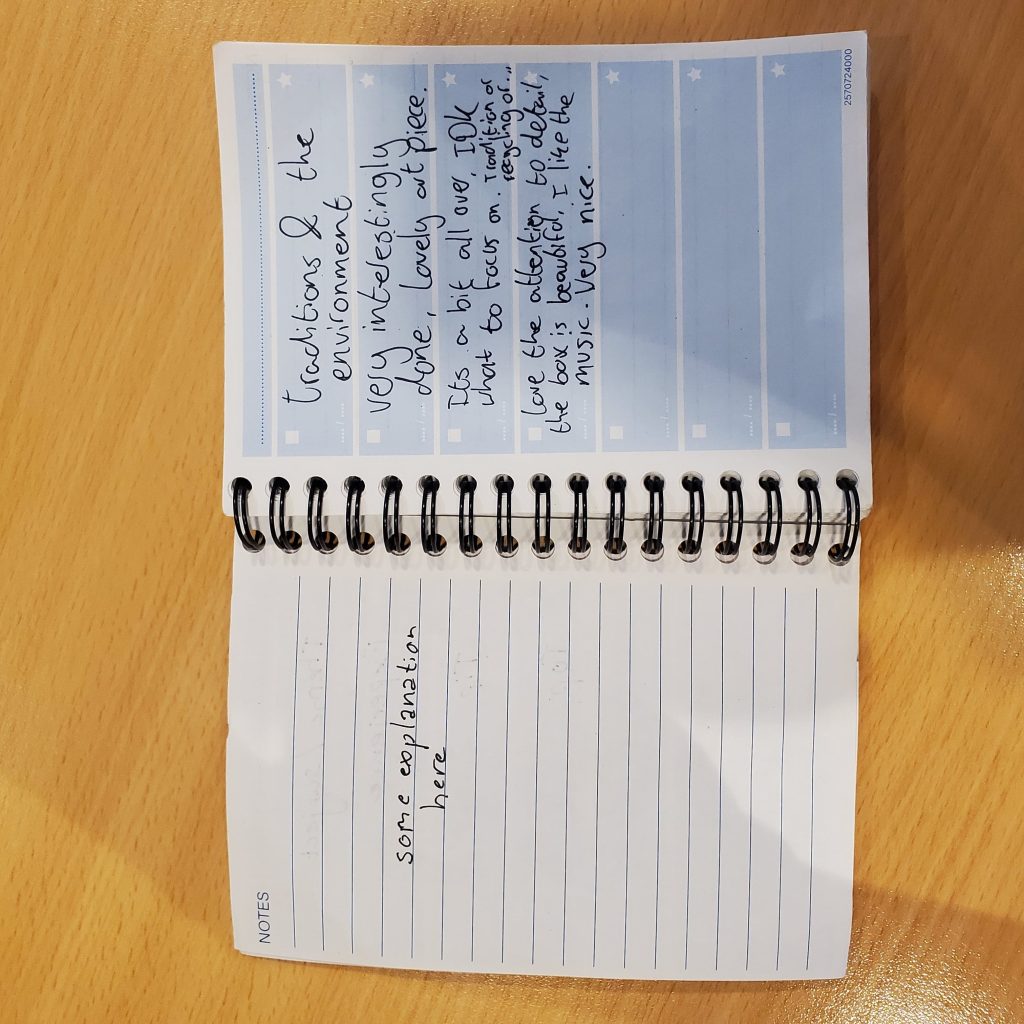
The day of the exibition the teachers give us a notebook to valuate the different expositions of our classmates. We had to note the Theme/Subject, how was the experience, any tip and finally what was top about the project.

LA MAYA CREATION

Would you change a tradition to make it more sustainable?

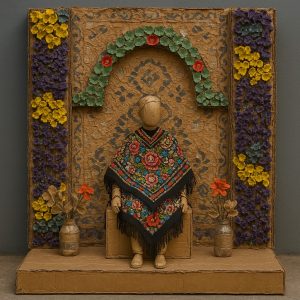
IDEA
Recreate La Maya tradition in a renobalble way. This image was the prototype idea that we had in the begining.
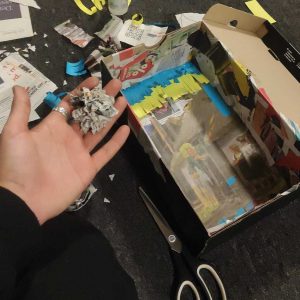
PROGRESS
Start building it with recicled material. Old newspapers, postits, a shoe box... after grouping all the material we started with the creation.
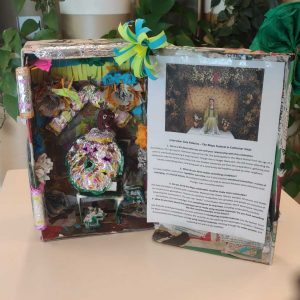
EXHIBITION
For the exhibition, we prepared music and an engaging interview to create a multi-sensory and immersive experience.

REFERENCES

  • Elsner, J. (2003). Imperial Rome and Christian Triumph: The Art of the Roman Empire AD 100–450. Oxford University Press.
  • Ingold, T. (2013). Making: Anthropology, Archaeology, Art and Architecture. Routledge.
  • Tsing, A. L. (2015). The Mushroom at the End of the World: On the Possibility of Life in Capitalist Ruins. Princeton University Press.
  •